Navigating the Future of Nuclear Innovation: Insights from Idaho National Laboratory
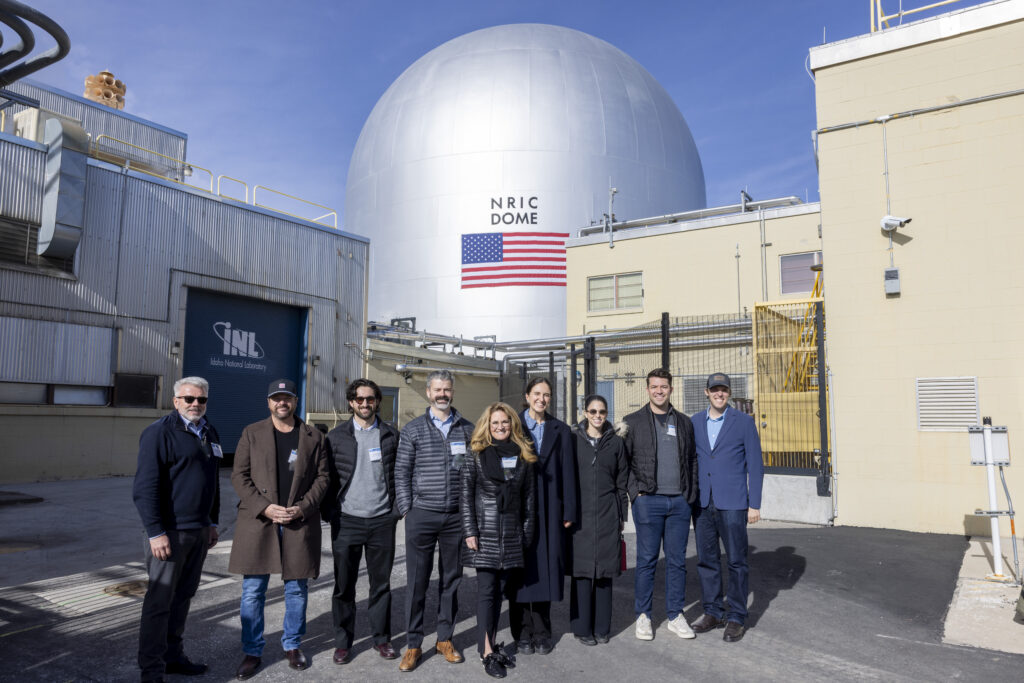
We recently partnered with Pete Mathias of Reveille VC to bring over 30 investors and operators to Idaho National Laboratory for a multi-day summit on nuclear research and innovation. INL is the nation’s lead nuclear energy research facility, and functions as the primary gateway for much of the advanced reactor work that will define the next decade. We wanted our network to see firsthand how quickly innovation is happening.
Getting the lay of the land
Over two and a half days, attendees engaged with INL leadership, DOE officials, and executives from companies building the next generation of reactors. Radiant, Oklo, Aalo Atomics, and Antares (a 53 Stations portfolio company) each presented on their progress and technical approach, walking attendees through real designs, test plans, and project timelines.
Panels covered advanced reactor development, fuel cycles, nuclear economics, and the emerging role of AI in nuclear operations. The group toured INL’s research facilities, including the historic EBR-I, where nuclear energy first produced usable electricity.
What stood out to us
The most striking thing about INL is how aligned public and private interests feel. Energy infrastructure has become a bipartisan priority, and the lab is moving at a pace that would have been hard to imagine even a few years ago. One lab director even keeps the administration’s executive orders in his backpack as a tangible reminder of what his team is working towards—including the directive that calls for three advanced reactor technologies to reach criticality before this Fourth of July. Criticality is the point at which a reactor sustains a controlled nuclear chain reaction—it’s exactly what you want. Everyone, from the lab teams to the reactor companies themselves, is laser-focused on achieving these milestones while maintaining the rigorous safety protocols that make nuclear reliable in the first place.
We were really impressed by how near-term much of this progress is. The DOME (Demonstration of Microreactor Experiments) facility is months away from being ready for reactor testing. Oklo received PDSA approval for its fuel fabrication pilot and announced a scalable 1.2 GW clean-energy campus with Meta in Ohio with initial deployment around 2030. Radiant has raised over $525 million in total funding and, later this year, will become the first reactor to test at INL’s DOME facility. Aalo constructed its INL facility in January. Founded in 2023, Antares became the first company to receive PDSA approval for its advanced reactor under the DOE pathway, positioning it to be among the first advanced reactors to go critical at INL.
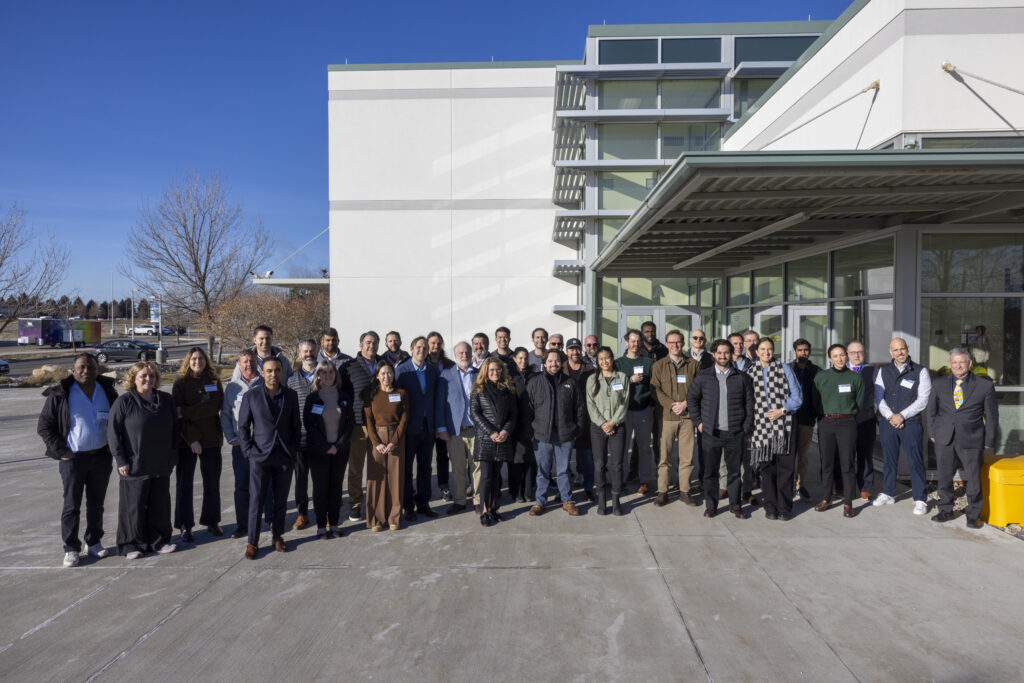
For Antares investors, the visit was even more tangible: We got a behind-the-scenes tour of where the team will assemble and test its first reactor on the path to achieving criticality this year. The Antares team, with backgrounds from SpaceX and INL itself, is a compelling example of what happens when commercial execution meets deep research excellence.
Looking at the full life cycle
One message that came through clearly at INL: a working reactor is necessary, but nowhere near sufficient. Kevan Weaver, Chief Technology Officer of INL’s Advanced Test Reactor, put it plainly: “Startups are hyper-focused on getting a reactor to work, but less rigorous about what comes after—specifically, turning heat into power.”
Getting a reactor to work is one thing. Turning that heat into usable electricity is another—and the timelines and engineering complexities involved are more challenging than many developers appreciate. For investors, this is a useful filter: teams thinking seriously about power conversion now, rather than treating it as a problem for later, are better positioned to succeed.
INL also reinforced an often‑missed point: not all reactors behave the same way in an off‑normal event. Traditional light water reactors need an alternative power source to keep coolant flowing for 12–24 hours after shutdown. Even after control rods are dropped, decay heat has to be actively managed. That’s part of why backup systems for the current fleet are so elaborate.
Many advanced modular reactors flip that logic. They’re engineered so that, if something goes wrong, the system naturally shuts itself down and sheds heat without operator intervention. In other words, you have to work to keep them running. That “walk‑away safe” profile is more than a talking point. It’s a fundamentally different risk surface for operators, regulators, and communities.
Fuel came up repeatedly as a hard constraint. Demand already exceeds supply, and INL leadership emphasized the bottleneck happening in conversion, as well as the urgency for onshoring enrichment capabilities. DOE investments are focused on building commercial enrichment capacity—but enrichment can’t happen without converted fuel. The equipment and services needed to debottleneck these steps are an underappreciated layer of the supply chain.
The broader ecosystem challenge goes beyond fuel. The entire support system around nuclear—building, maintaining, supplying, transporting—has largely atrophied over three decades of underinvestment. Licenses expired, fuel processing capabilities lapsed, storage infrastructure went dormant. That ecosystem is now ramping back up, and the rebuild itself represents a significant investment opportunity across design, transportation, concrete, and specialized services.
And what happens after a reactor uses this fuel? If we’re going to be in a nuclear future, thinking about the after is key. As the INL team discussed, there’s economic value in end-of-life fuel. But the chokepoints are real: building recycling facilities is capital-intensive, fabricating recycled fuel is technically complex, and there’s still no consensus on where the waste ultimately goes.
Then there’s the software layer. INL’s Genesis Mission—a national initiative to accelerate science innovation through AI—estimates that AI-driven design, licensing, and operations workflows could reduce nuclear O&M costs by up to 70%. This is the AI x infrastructure flywheel in action: nuclear is part of the energy infrastructure that makes AI possible, and AI is simultaneously accelerating nuclear development, from reactor design to siting to operations.
Continuing the conversation
These threads—supply chain bottlenecks, end-of-life fuel economics, and the emerging data and automation layer—map directly to how we’re investing at 53 Stations. We’re focused on the infrastructure that makes advanced nuclear work, not just the reactors themselves:
- Fuel conversion and enrichment bottlenecks
- Manufacturing, construction, and logistics capacity that’s being rebuilt from scratch
- Power conversion, grid integration, and lifecycle services
- The data, automation, and AI tooling that sit on top of the workflows
We’re grateful to the INL team for hosting us, and to the nuclear innovators who shared their work with such energy and conviction.
We’ll be publishing more on nuclear and energy infrastructure in the months ahead. If you want to stay close to our thinking—and be first to hear about future events like the INL summit—subscribe to our newsletter.