Lessons from the 2026 TPO Portfolio Summit in Deer Valley
Early this June, we hosted our 2026 TPO Portfolio Summit in partnership with our sole LP, The Pritzker Organization (TPO). Set against the alpine resort of Deer Valley in Utah, the three-day event brought together 100 leaders from the TPO and 53 Stations ecosystem. Our portfolio founders networked with C-Suite executives from TPO’s enterprises including STV, Lithko, KBP Foods, and Hyatt.
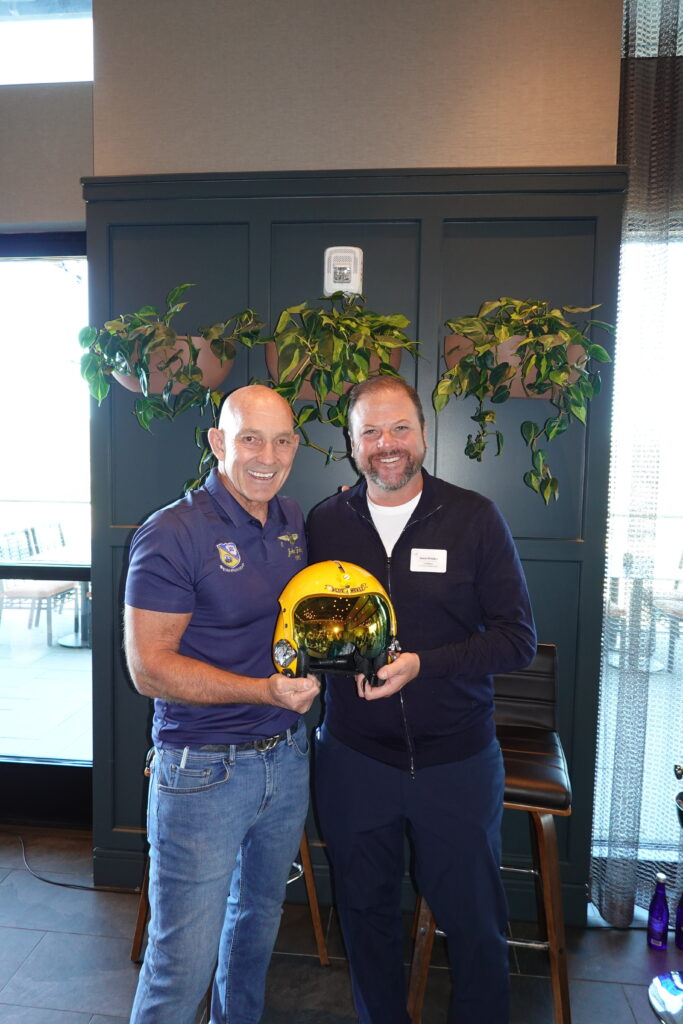
The Summit kicked off with guest speaker John “Gucci” Foley, former Lead Solo Pilot of the Blue Angels. He spoke of what it takes to execute at the level the Blue Angels demand: cultivating excellence not just through raw talent, but through relentless preparation and trust in the people around you. It was a fitting frame for the following days’ sessions, with topics covering human capital management, M&A, fundraising, and leading in an AI era.
The emphasis on people, connection, and trust kept surfacing during the Summit. Team is everything, so pick well. Leaders must evolve or become the ceiling. Choose people over systems. Or, as the Chairman, President and CEO of Hyatt put it, “Mindset and behavior eat hard skills for lunch.”
Interspersed in the following days of programming were an array of activities from fly-fishing and golf to bobsledding down a former Olympic Track. Our team and the 53 Stations portfolio company leaders had ample opportunities to network with the TPO ecosystem.
AI in Practice
Given boardroom pressure to deliver financial returns with AI, one session provided all leaders a usable framework. TPO’s Digital Transformation expert Eric Zhang led the session and called the situation as it is: The CEO is the de facto chief AI officer, named or not. That’s a lot of strategic weight on a leader.
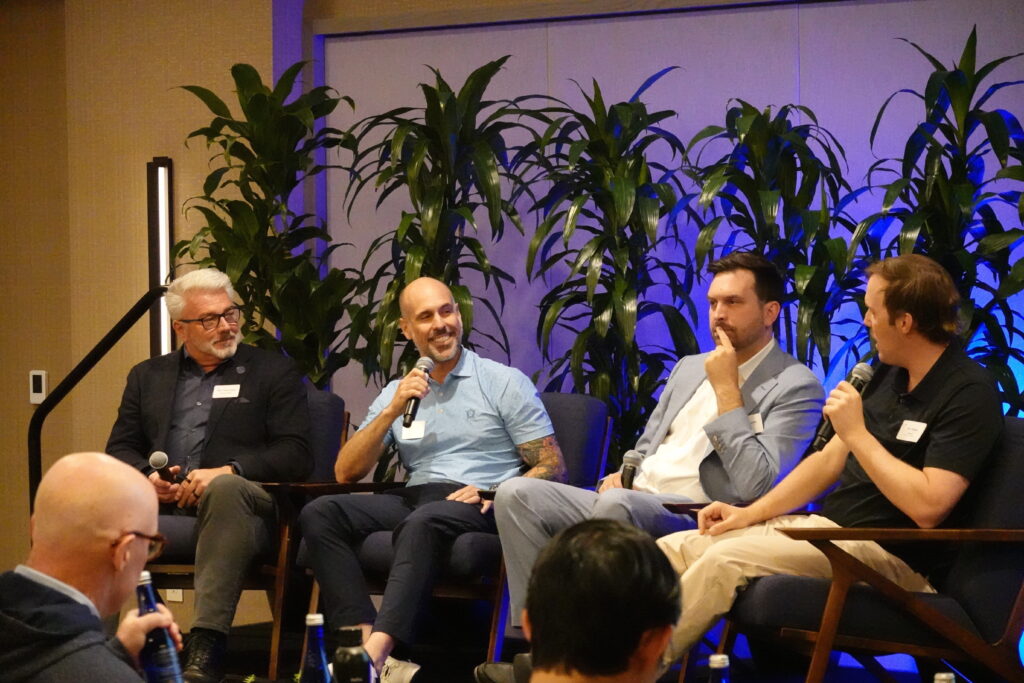
Panelists from Bain, STV, and Kaya AI came to the panel ready to discuss their unique vantage point. From these perspectives—the consultant, the buyer, and the builder—each provided lessons and tangible examples for leaders to use. They also discussed a question CEOs are constantly grappling with: If Claude can do nearly everything, do enterprises really need to invest in a full AI stack?
Kaya AI’s co-founder and President Nick Selz chimed in, “There’s not one model that performs the best at every single task. It’s highly variable, and that performance also shifts drastically over time.” He made the case that enterprise AI is a workflow to redesign, not a license you buy. Kaya AI, a construction supply chain intelligence platform, maps existing processes, people, and technology before introducing any model, because adoption fails when the solution floats free of that reality.
Dunigan O’Keeffe of Bain & Company argued that a critical leadership job in AI is to name the destination: a specific, exciting picture of what the company can become. Most stay quiet on what AI makes possible inside their own organization, ceding the narrative to outside voices and falling back on reassurance. People don’t mobilize for reassurance; they mobilize for something worth building.
The energy bet behind the AI buildout
AI demand is growing faster than available power infrastructure. So, energy-efficient AI architecture and energy options like nuclear power are essential to the future of hyperscaler computing.
Pete Mathias of Reveille VC moderated our energy transition panel with the founder and CEO of 53 Stations’ portfolio company Antares, Jordan Bramble; Idaho National Laboratory’s CTO Brian Smith; and 53 Stations’ Wayfinder, Phill Lawson-Shanks.
Just days before our Summit, Antares announced that it reached criticality at Idaho National Laboratory. This was the first privately developed advanced reactor in the country in decades and the 53rd reactor to operate at the lab (not to mention a delightful callout on-stage to 53 Stations). Jordan Bramble made the case that demand is about to outrun anything the grid was built for. Three forces are converging on it at once: AI, reindustrialization, and next-generation national security, and meeting them, he said, will take 10x current electricity generation.
The group also discussed the underinvestment of the grid as a massive issue. They even traced the origin back to the post-dot-com years, putting the near-term bill at $2 trillion over two years—the amount the industry needs to spend on power and data center capacity to meet AI and cloud demand. Brian Smith explained why advanced nuclear sat stuck for decades: Utilities would not absorb first-of-a-kind risk. What changed was the arrival of hyperscalers with balance sheets larger than many countries and the urgency to buy power now. That new class of buyer reset the commercial equation and opened the door for companies like Antares.
Helping Founders Understand M&A
Just as AI and power usage issues face leaders today, navigating M&A is complex and hard to get right.
The operators in this room have done M&A at real scale, and the first thing they agreed on is that the deals that go wrong usually have one of the following things in common: emotion, growth for its own sake, or a hasty decision to acquire without a sound strategy.
Larry Tarschis, Managing Director of TPO, moderated the session, and the frame he set held throughout. It was to buy and build, not buy and hold. Acquisitions are instruments of growth, not accumulation. That distinction sounds simple until you’re in a competitive process.
53 Stations portfolio company Emergence is the clearest embodiment of this thesis. Henry Zhang, founder and CEO, has built his company through acquisition with intention. What made the model repeatable wasn’t just deal flow. It was owning the full acquisition process internally rather than distributing it across generalists. A handful of people review every opportunity through a sourcing engine built on people, process, and AI.
“When we started the business, we wanted M&A to be a core part of the thesis. The way we think about it: One, it is a way to build businesses, to build a company of companies. And two, it’s a way to expand the surface area for organic growth.”
— Henry Zhang, Founder & CEO, Emergence
The discipline theme ran through the other panelists, too. Mike Kulp of KBP Brands, who has completed many acquisitions in his career, was candid about an early mistake: Staying concentrated in a single brand too long left the company exposed to commodity swings that a broader mix would have cushioned. The lesson for founders isn’t just about M&A. It’s about building diversification as a hedge before you need it.
Others who spoke during the summit included Hyatt CEO Mark Hoplamazian, who joined by video to discuss brand, talent, and technology. Among many lessons shared, he gave the room a read on how a premium company operates and the habits teams should develop early.
You can hear some of this wisdom from our Managing Partner Jason Pritzker, who sits on Hyatt’s board, on a recent episode of the How I Invest podcast to talk about the lessons from his board service that apply to early-stage companies: opening each meeting with an executive session, sending materials far enough ahead that the time together goes to discussion rather than recap, and running the board as a working group rather than an audience.
A Summit for the Books
We had a blast and found picturesque Deer Valley a perfect place to connect.
The role of convener is one we take seriously, and we look forward to doing it many times over before the next Summit, through dinners, events, and the work of connecting our people year-round.